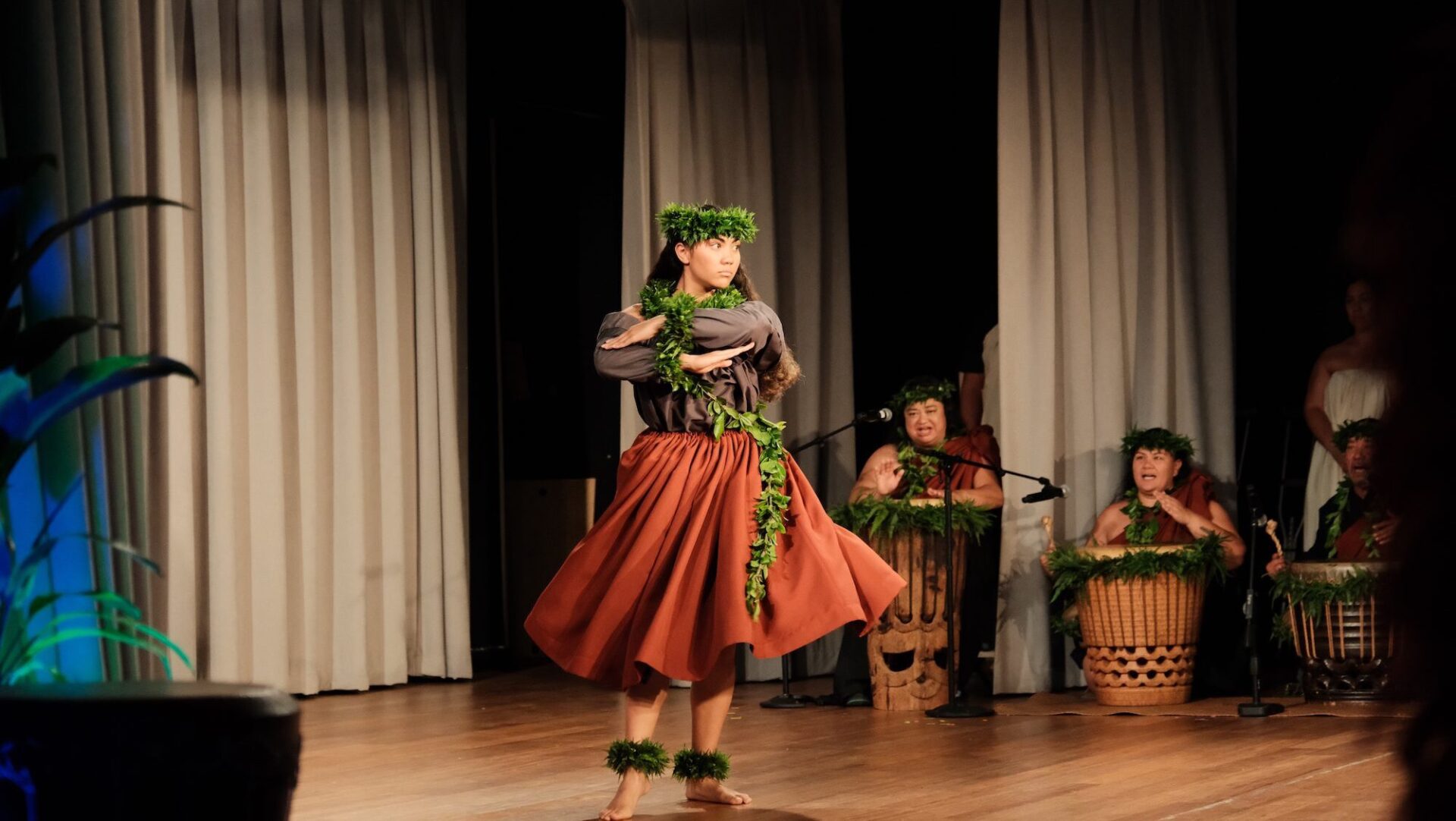
Some people travel for Taylor Swift. I travel for hula.
When it comes to a tropical vacation, ocean waves and palm trees radiate the main character’s energy. As much as I love the beach, what gives me the most satisfaction are the authentic experiences that provide a window into the local culture. That’s why I went to Maui for a children’s hula competition.
The Taylor Swift effect
Thanks to Taylor Swift, it’s no longer uncommon to travel to a faraway city to see your favorite artist perform. I know fans who have flown to different continents to see the Eras Tour. If they can travel for Taylor Swift, I thought, why can’t I go to Hawaii to hula?
CHILDREN’S ADVICE: Where Taylor Swift Should Go on Vacation, According to My Kid
A lifelong love of Hawaii and hula

I first visited Hawaii when I was little, in the 1970s. My aunt and uncle lived in the small town of Waianae on Oahu. Much to the relief of my working parents, I was invited to spend a whole summer with them on the island. While my friends from New York went to day camp, I went barefoot, ate poi, and fell in love with Hawaii and hula.
Hula connects Hawaiians to their heritage
You may know hula as a dance form, and it is. However, it transcends physical movement, acting as a vehicle to preserve traditions.. Under colonization, Hawaiian culture and language were actively suppressed, almost to the point of extinction. The resurgence of the Hawaiian language and the popularity of hula are particularly significant in this light.
OUTRIGGER is committed to sharing Hawaiian culture
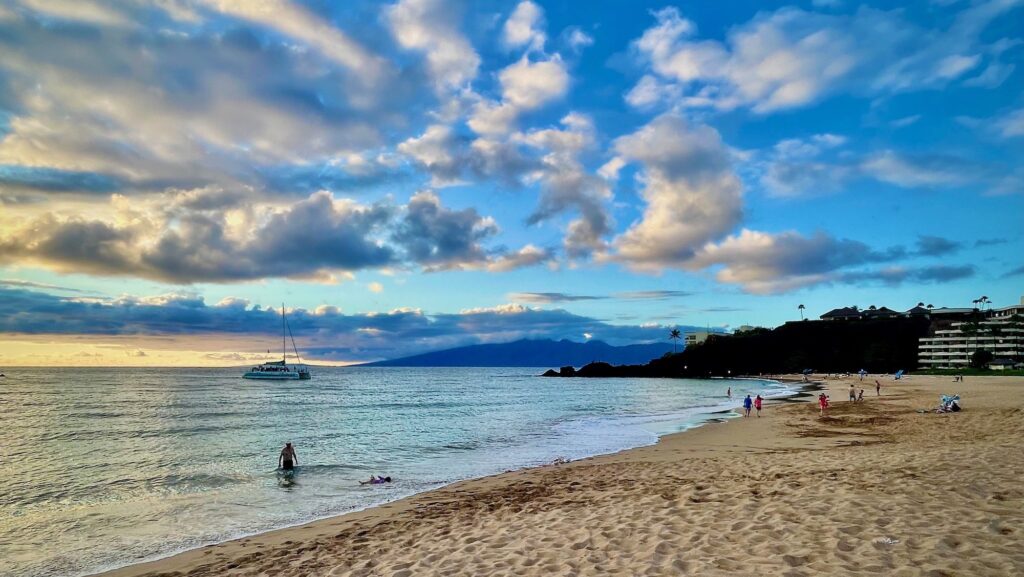
I had already discovered OUTRIGGER, a brand born in Hawaii, and its commitment to preserving Hawaiian culture when my family and I vacationed at the OUTRIGGER Reef Waikiki Beach Resort last year. We were impressed by the range of experiential offerings available to guests who respectfully delved into Hawaii’s heritage, from necklace-making workshops to ukulele lessons. At OUTRIGGER Kona Resort & Spa, we participated in immersive programming rooted in Hawaiian language, history and mythology, all led by a team of cultural practitioners.
When I learned that OUTRIGGER had held the annual children’s hula competition every fall since 1993 at its Kā’anapali Beach Resort on Maui, I correctly suspected that it would be 100% authentic.
FAMILY WINNERS: Best Resorts & Family Hotels in Hawaii
Children compete solo

Hula O Nā Keiki from OUTRIGGER is a hula competition for ages 6 to 17. The competition takes place over two days. The competitors are divided into two groups, one for the youngest and one for the teenagers. Everyone performs both hula kahiko (ancient hula) and hula ʻauana (a modern-style hula).
Unique among hula events, young artists perform solo. However, even if the contestants are alone on stage, the importance of mentorship is essential. Each child’s kuma hula (hula teacher) is present and honored. As a former teacher, this respect really struck me.
Entertaining but not entertaining
Keep in mind that this is not a luau designed for your entertainment. It’s not touristy community celebration that aims to connect Hawaii’s past with its present. This results in the singing of the Hawaiian National Anthem (formerly the National Anthem of the Hawaiian Kingdom), Hawaiian words scattered throughout, and plenty of inside jokes told by the MC. Many families, former participants and former winners were present. Tickets are reasonably priced to encourage inclusiveness.
The hula competition begins
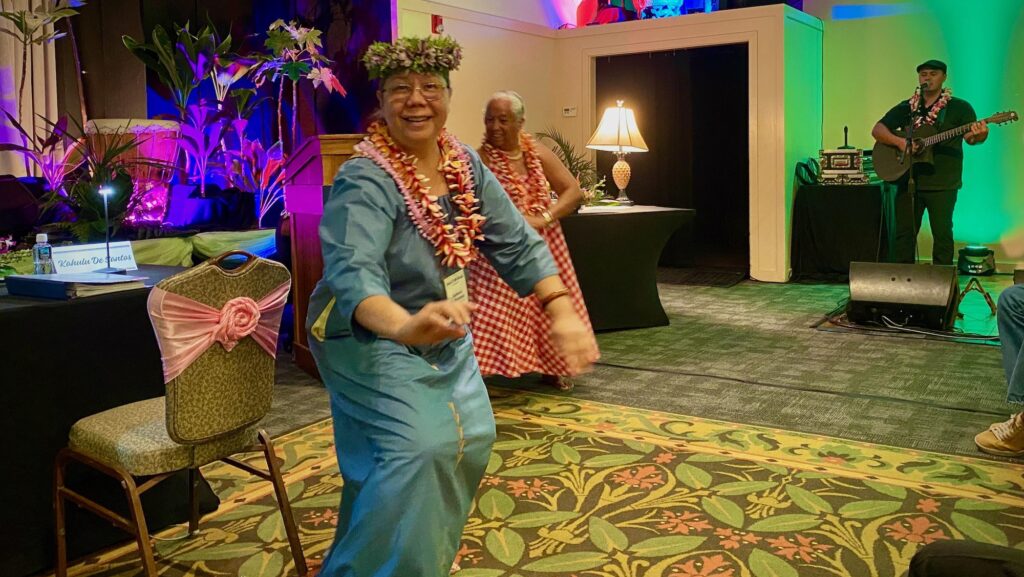
The event started at 4pm and ended at 8pm on both days, giving me plenty of time to enjoy the beautiful Kā’anapali Beach beforehand. Organized in the hotel auditorium, seats were assigned by order of arrival. I arrived early and scored a prime spot in the front row, right behind the judges.
The judges and many audience members wore lei, Hawaiian shirts or muumuus, and adorned their hair with fragrant flowers that perfumed the entire audience. In an attempt to blend in, I wore a long pink dress with a bold floral print, very different from my usual all-black outfit. As I waited for the contestants to take the stage, the panel of six esteemed judges rose from their seats for an impromptu hula dance while the trio played Hawaiian music.
After about an hour of music, socializing, and casual banter, the young contestants began to appear. One by one, everyone took the stage with the greatest courage and composure.
The first night was dedicated to hula kahiko, a venerable form of hula that echoes the past with chants, songs and percussion instruments to convey stories deeply rooted in Hawaii’s history. This is the kind of pure hula that was practiced before encounters with Western cultures.
The second night featured hula’ auana, a more modern evolution of hula developed in the 19th and 20th centuries. It features fluid movements and space for personal expression, often accompanied by the sounds of the ukulele. This is the style of hula you may have seen on television or at popular luaus.
I found both forms of hula fascinating to watch.
Hands don’t lie
Swaying the hips is a well-known feature of hula, although it is the expressive hand gestures that form the foundation of this art form. Seeing the hula up close, I noticed the hands as a visual dictionary telling the story with lots of nuance.
And the winner is…..
After the last contestant performed on the second day, there was an intermission for the judges to deliberate. This gave me time to browse the Hawaiian Arts Market held alongside the competition, where local artisans sell food, clothing, and crafts. I saw several young candidates walking around the market. On stage, they appeared like young goddesses; in the real world, they looked like normal children.
After a refreshing glass of POG, the acronym for a refreshing local concoction made from passion fruit, orange and guava, I was ready for the competition to resume.
The big moment had finally arrived. Winners were announced in several categories. The overall winner was 17-year-old Elizabeth Kamaile Kahailihauwelo Kekahuna. She was crowned, kissed and showered with prizes. I know it sounds cheesy, but in my eyes, each child was a winner because they were prepared, serious, and exuded a palpable sense of pride.
I’m glad I traveled for the hula
Seeing the dedication of these young artists to their ancestral heritage was captivating. I felt privileged to attend such a culturally relevant event. I learned so much about hula and Hawaiian values. If you want to dig beneath the surface and open your eyes to authentic Hawaiian culture, start planning a trip to Maui next fall.
More from FamilyVacationist:
Traveling
Agen Togel Terpercaya
Bandar Togel
Sabung Ayam Online
Berita Terkini
Artikel Terbaru
Berita Terbaru
Penerbangan
Berita Politik
Berita Politik
Software
Software Download
Download Aplikasi
Berita Terkini
News
Jasa PBN
Jasa Artikel

Related Posts
Argentina Menghadapi Proses Disiplin FIFA Atas Dugaan Pelanggaran Piala Dunia – complex.com
Apakah Messi bermain hari ini? Apa yang perlu diketahui tentang MLS All-Star Game 2026 – Yahoo Sports